|
By Noah Good, Marketing Manager and History Program Educator In so many ways, January 20, 1896 was a typical winter day in Boston. Pedestrians opened their umbrellas against the quickly falling snow and pulled their coats tightly against the cold. But walking past the King’s Chapel Burying Ground, they saw something surprising: thousands of sparrows. An article from The Boston Daily Globe reported: “Hundreds tarried on the sidewalks near the King’s chapel burying ground to see the sight, and sharp and varied were the comments. The naked trees within the enclosure of the dead were heavy with importunate bird life.” The English Sparrow (Passer Domesticus) in North America, Especially in Its Relations to Agriculture. Image by Merriam, C. Hart, and Walter B. Barrows. These were English sparrows (also called house sparrows) – small, stout birds with cone-shaped beaks. The birds “perched in the elms and chestnuts, piping as if their very lives depended on the volume of the noise they made.” “Nothing like it had ever before been seen,” the Globe reported. Though several people nearby had seen “previous gatherings” of sparrows in the burying ground, “the grand congress of the passer domesticus of yesterday afternoon out-birded any other congregation of birds of which there is a memory.” The birds kept arriving in “batches” until 4 pm. All of these assembled birds “were giving throat,” filling the air with song. The noise was overwhelming. “The chorus of the birds reminded one man of a ring-spinning room in a cotton factory with full speed on. To others the plaint was like the hissing of 10,000 peanut roasters.” The English Sparrow’s song is not one of its better qualities. A participant in an 1889 study of English sparrows wrote, “To many our singing birds form the very poetry of the year; and when they are replaced, or their music is drowned by these noisy and dirty Sparrows, so that half the charm of spring is gone, no little suffering results … I have often counted a hundred and more successive chirps by one Sparrow, in exactly the same key, a real torture to the ear.” Life cycle of the cankerworm, from Annual Report of the Maine Agricultural Experiment Station 1885. In 1896, English sparrows were a fairly new sight in Boston. A non-native species, they’d only been introduced to the city twenty-eight years ago. In the mid-nineteenth century, cities across North America began importing English sparrows. Brooklyn, NY was first, introducing the birds in 1850-1852. The goal was pest control. Two species of caterpillar were stripping the trees in public parks and city streets: the caterpillars of the geometrid moth and the spring cankerworm moth. English sparrows would feed on these caterpillars and help preserve the beauty of public parks. Why rely on English sparrows and not the native bird population? Some argued that the interest in English sparrows came from Europeans who felt an “immigrant-longing for a ‘home-bird.’” This feeling proved powerful, especially when coupled with general ignorance about native birds and the belief that “anything European must of necessity be better than anything native.” Whatever the reason, the “craze” for importing English sparrows spread across America. According to journalist George Punchard, the city of Boston ordered one hundred and fifty sparrows. Only twenty bedraggled sparrows arrived, “tailless and nearly featherless.” In autumn 1868, these birds were released into Boston Common. As in Brooklyn, Boston’s house sparrows seemed at first to be helpful, reducing the caterpillar population and protecting the trees in the Common and the Public Garden. Boston ornithologist Thomas Mayo Brewer championed the sparrows’ cause. The birds did have a tendency to eat grain, he acknowledged, but who would not “cheerfully pay his proportion of loss in an extra price for his flour” in exchange for the sparrows’ “bright and cheerful companionship in the dreary desolation of our winter”? Brewer was confident in the sparrows’ success, believing that “the house-sparrow will erelong become one of our most common and familiar favorites.” Affection for the sparrows was so strong that Elliott Coues, one of the sparrows’ prominent opponents, was harshly criticized. In 1877, Reverend Henry Ward Beecher reproached Coues: “No raven shall ever bring him meat. His name shall be known in the kingdom of birds as a public foe. A price shall be put upon his head, and on some day unawares he shall be surrounded by swarm of sparrows, darkening the sun, and multitudinous as the locusts of Minnesota.” The birds would pluck the hair from Coues’ head and the threads from his clothing, taking it to build nests for more sparrows. “No requiem shall be heard. … And sparrows shall have peace in all the land!” But affection toward the English sparrow soon soured. As Boston’s sparrows multiplied, so too did the city’s problems. The sparrows nested in gutters, pipes, and roof drainage, causing overflows. Their nesting also damaged vines and foliage. Their “filth” was also upsetting. In Washington, D.C. “the benches and other resting places in parks and squares are so befouled that frequently not one is available, and the adventurous stranger who lingers long in such places is sure to have his apparel, as well as his pleasure, marred by the omnipresent Sparrow.” The sparrows also pushed out native birds. A 1925 book on Massachusetts birds writes, “By attacking in numbers the Sparrows were able to kill birds as large as the Robin or the Northern Flicker; when only two or three Sparrows were together, they were more likely to follow a native bird about until, disgusted, it left the neighborhood.” It also turned out that English sparrows don’t really eat that many insects. One critic speculated that if native birds had received the kind of encouragement sparrows had, the worm problem would have been solved. In fact, introducing sparrows made the insect problem worse. Native birds fed on the same insects that sparrows had been imported to kill. Sparrows, meanwhile, didn’t feed on hairy caterpillars at all and pushed out the native birds that did. As a result, the hairy caterpillar population exploded. Some also considered the birds a moral threat. English sparrows chattered, bullied other birds, and mated often. Naturalists Thomas Gentry and Claude T. Barnes both observed this latter activity with a stopwatch and were quite alarmed. Gentry described the birds as “saucy knaves.” As English sparrows spread across North America, more and more people raised concerns about the bird’s impact. By 1880, public opinion had turned against the English sparrow. A scathing report from 1889 wrote, “Like a noxious weed transplanted, to a fertile soil, [the sparrow] has taken root and become disseminated over half a continent before the significance of its presence has come to be understood.” There are interesting parallels between the language used in the sparrow war and anti-immigrant rhetoric of the period. When English sparrows first arrived, they were lovingly likened to Jamestown’s colonists. But as their reputation sank, English sparrows were no longer seen as “noble” colonists, but as “lowly” immigrants. They were alternately called “immigrant [finches],” “songless immigrants,” and “filthy, noisy, quarrelsome, and bloodthirsty [foreigners].” Though claiming to be unbiased, many ornithologists described English sparrows in ways that feel all too similar to anti-immigrant stereotypes. These sparrow-hating ornithologists connect to a bigger historical picture. The late 19th century saw an increase in immigration to New England, particularly from Eastern and Southern Europe. By 1880, almost 64% of Bostonians were first or second generation immigrants. Many Boston Brahmins–Anglo-Saxons from prominent families–worried about the “quality” of these new arrivals. In 1894, a group of prominent Bostonians founded the Immigration Restriction League and began pushing for reform. Some advocates for restricted immigration used the English sparrow to make their point. If the English sparrow being an “immigrant” was a problem, the “English” part of its name was no help either. Many Northerners still harbored resentment towards the British from the Civil War, as some members of the British public had sympathized with the Confederacy. For the people watching the “congress of sparrows” in King’s Chapel’s Burying Ground in January 1896, was this sight beautiful? Or was it a worrying sign of how numerous Boston’s house sparrows had become? Three years later, in March 1899, over 400 people submitted a petition to Boston mayor Josiah Quincy VI. The group (organized by the American Society of Bird Restorers) asked the mayor to deal with “the noxious imported Finch, known as the English Sparrow.” They argued that the birds’ “defilement” of buildings and trees were “not only a source of much expense, but an aesthetic disgrace to Boston.” Taking the petition to heart, Mayor Quincy announced a campaign against the birds. On March 13, the public grounds department began destroying house sparrow nests. Quincy was clear that traps and poison were not to be used. Five men, led by W. J. Kennedy, went through the Common knocking nests down from trees, electric poles, monuments, and buildings. One reporter wrote, “Men with ladders, new white-handled pikes and freshly painted carts for refuse, went chasing about under the bare trees, looking for all the world like a lot of overgrown boys out on a holiday robbing birds’ nests.” The original plan was to sweep the Common, then the Public Garden, followed by other public parks and grounds. This work was to last until October. It seems the war on sparrows caused some Bostonians to sympathize with the birds. The Boston Daily Advertiser received letters from concerned citizens. One woman wrote: “I have for several years fed some 20 or 30 of the little fellows, and it would be a great grief to me to find in my garden some poor little wounded one, who has been left to die as best it may.” One reporter saw “well-known business and professional men” leave parcels of crumbs for the birds on the Common. The Massachusetts’ Society for the Prevention of Cruelty to Animals was especially opposed to Quincy’s bird war. Mayor Quincy received so many letters objecting to the sparrow war that he held a public hearing on March 17. Over 200 people attended the three-hour hearing, with 105 voting in support of the sparrows and 70 voting against. Mayor Quincy finally called off the nest-smashing on April 5. He argued that the efforts were too much of a drain on the public grounds department, distracting them from their usual responsibilities. Having survived this attack, English sparrows rebuilt their nests around the city. While many nests had been destroyed in the Boston Common, the Public Garden had not been cleared, and the sparrows continued to flourish there. In a poem published by The Boston Daily Advertiser, a sparrow and a pigeon discuss the sparrow war. “Oh, well, ‘Tommy-Atkins’-sparrow, you really have to go– Today, English sparrows can be found all across the city, nesting in the public gardens and parks. They still occasionally visit the King’s Chapel Burying Ground—though in far less impressive numbers than in 1896. BibliographyBeecher, Henry Ward. “Star Paper: Sparrows to the Rescue.” The Christian Union, August 8, 1877. https://archive.org/details/sim_new-outlook_the-christian-union_1877-08-08_16_6/page/102/mode/2up.
Brewer, Thomas Mayo. “The European House-Sparrow.” The Atlantic Monthly. May 1868. https://www.theatlantic.com/magazine/archive/1868/05/the-european-house-sparrow/628410/. Brodhead, Michael J. “Elliott Coues and the Sparrow War.” The New England Quarterly 44, no. 3 (1971): 420–32. Cannato, Vincent J. “Immigration and the Brahmins.” Humanities 30, no. 3 (2009). https://www.neh.gov/humanities/2009/mayjune/feature/immigration-and-the- brahmins. Chamberlain, Samuel. King's Chapel Burying Ground in snow, Boston. ca. 1928-1971. Photograph. Phillips Library at the Peabody Essex Museum. https://www.digitalcommonwealth.org/search/commonwealth:q811r8815. Chapman, Frank M., ed. “The So-Called Sparrow War in Boston.” In Bird-Lore, vol. 1. The Macmillan Company, 1899. Coates, Peter. “Eastenders Go West: English Sparrows, Immigrants, and the Nature of Fear.” Journal of American Studies 39, no. 3 (2005): 431–62. “Eviction of Sparrows Commences.” The Boston Globe. March 14, 1899. Forbush, Edward Howe. “Passer Domesticus Domesticus. House Sparrow.” In Birds of Massachusetts and Other New England States. Massachusetts Department of Agriculture, 1929. http://archive.org/details/birdsofmassachus03forb. Glass, Chris. “The House Sparrow in Boston, Part I-III.” The Boston Public Library, July 28, 2022. https://www.bpl.org/blogs/post/the-house-sparrow-in-boston-part-i. "Hearings End." Boston Daily Advertiser, March 23, 1899, 8. Nineteenth Century U.S. Newspapers (accessed December 27, 2025). https://link-gale-com.ezproxy.bpl.org/apps/doc/GT3007097704/NCNP?u=mlin_b_bpublic&sid=bookmark-NCNP&pg=8&xid=ea3d3739. “The Last Roost of the English Sparrow.” The Boston Globe. March 17, 1899. Maine Agricultural Experiment Station. Annual Report of the Maine Agricultural Experiment Station. With American Museum of Natural History Library. 1885. http://archive.org/details/annualreportofma1903main. "Mayor Gives up." Boston Daily Advertiser, April 6, 1899. Nineteenth Century U.S. Newspapers (accessed December 27, 2025). https://link-gale-com.ezproxy.bpl.org/apps/doc/GT3007081793/NCNP?u=mlin_b_bpublic&sid=bookmark-NCNP&pg=1&xid=ec5b65e5. Meckel, Richard A. “Immigration, Mortality, and Population Growth in Boston, 1840-1880.” The Journal of Interdisciplinary History 15, no. 3 (1985): 393–417. https://doi.org/10.2307/204138. Merriam, C. Hart, and Walter B. Barrows. The English Sparrow (Passer Domesticus) in North America, Especially in Its Relations to Agriculture. U.S. Department of Agriculture, 1889. “No Anglo-American Alliance in the Feathered World.” The Boston Globe. March 4, 1899. “The English Sparrow in New England.” In The New England Magazine, vol. 29, with Fletcher Osgood. Boston : [New England Magazine Co.], 1903. http://archive.org/details/newenglandmagaz07unkngoog. Punchard, George. “English Sparrows on Boston Common.” The Congregationalist (Boston), November 9, 1871. "Sparrows Rebuild Nests." Boston Daily Advertiser, 24 Mar. 1899, p. 2. Nineteenth Century U.S. Newspapers, link-gale-com.ezproxy.bpl.org/apps/doc/GT3007097740/NCNP?u=mlin_b_bpublic&sid=bookmark-NCNP&pg=2&xid=cfbfe2c7. Accessed 27 Dec. 2025. "Vive Le Sparrow." Boston Daily Advertiser, March 25, 1899, 2. Nineteenth Century U.S. Newspapers (accessed December 27, 2025). https://link-gale-com.ezproxy.bpl.org/apps/doc/GT3007097831/NCNP?u=mlin_b_bpublic&sid=bookmark-NCNP&pg=2&xid=63a32211. “The Women’s Plea.” The Boston Globe. March 25, 1899.
0 Comments
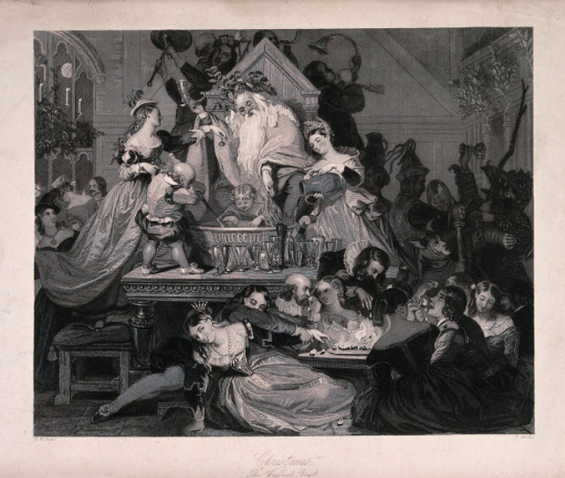
By Noah Good, Marketing Manager and History Program Educator Every December, members of the King’s Chapel congregation gather to “green” the sanctuary, decorating the space with pine boughs, evergreen wreaths, poinsettias, and red bows. “Greening” churches for Christmas is an old tradition. In the 16th century, several English churches bought holly and ivy for Christmas, as shown in their account books. The practice of decorating with greenery in the winter is much older. During the Roman festival of Saturnalia, which took place during the winter solstice, people decorated their homes with evergreens. While evergreen decorations are a common part of Christmas today, they used to be highly controversial in Boston, as was Christmas itself. In 17th century England, Christmas was a rowdy time, marked by excessive eating and drinking as well as rituals which turned the established social hierarchy on its head. Historian Stephen Nissenbaum describes Christmas during this period: Revelling could easily become rowdiness; making merry could edge into making trouble. Christmas was a season of 'misrule,' a time when ordinary behavioral restraints could be violated with impunity. It was part of what one historian has called “the world of carnival.” (Nissenbaum 85) It should come as no surprise, then, that the puritans frowned upon Christmas. In 1659, puritan Massachusetts officially banned Christmas: celebrating the holiday was punishable with a five shilling fine. The law was repealed in 1681 after pressure from the English crown. There was another reason why puritans disliked Christmas: they viewed the holiday itself as a holdover from Paganism. There is some truth to this statement. After all, there is no historical or biblical basis to believe Christ was born on December 25. Instead, Christmas lines up with the winter solstice, a holiday older than Christianity itself. One puritan father summed up this argument very well: “Be you not observers of festival seasons; none were ever celebrated in the times of the Apostles, nor Christmas day heard of. Besides, it hath been never yet proved that Christ was born on December, the 25th but more probable in September.” But Christmas officially arrived in Boston in 1686, whether the puritans wanted it or not. That year, a new governor, appointed by the King, took over control of Massachusetts. Governor Edmund Andros arrived in Boston on December 20, 1686. That Christmas, two religious services were held at Boston’s Town House. Andros attended both, “with a Red-Coat going on his right hand and Capt. George on the left.” But puritan Boston did not recognize the holiday: shops stayed open and people went about their business as usual. In the coming years, puritan magistrate Samuel Sewall noted in his diary whether shops in Boston stayed open on Christmas. In 1697, he “took occasion to dehort [his children] from Christmas-keeping, and charged them to forbear.” In 1749, work began on a new building for King’s Chapel. Four years later, as construction continued, the congregation wasn’t able to worship in their own space. Leaders at King’s Chapel turned to their neighbor for help: Old South Meeting House, a Congregationalist church. Congregationalists descend from the puritans, and Old South Meeting House was one of the first puritan churches in Boston. In October 1753, King’s Chapel leadership asked Old South if they could use their space to hold Christmas service. In early December, Old South Meeting house replied that King’s Chapel would be welcome to use their building, so long as they “would not decorate it with Spruce.” Spruce is a kind of evergreen tree, and its branches might have been used to decorate the chapel at the time. It wasn’t until the mid-19th century that Christmas started to become popular in New England. An 1893 Boston Globe article shows how Christmas gained popularity around this time. In this article, a reporter interviews several older men about their childhood memories of Christmas. Many didn’t experience Christmas until later in their lives. Dr. E. E. Hale said, “The first public recognition of Christmas that I ever noticed were evergreens at King’s chapel and at St Paul’s church about the year 35 or 36.” Another man, Colonel Thomas Wentworth Higginson also said King’s Chapel was one of his first Christmas experiences: he went to visit in 1840 to see the decorations. Higginson might have seen decorations like these, recorded in an engraving from 1856. Newspaper articles from the end of the nineteenth century describe King’s Chapel as being decorated with hemlock branches and evergreens for Christmas. A reporter in 1897 said the decorations were striking, “[producing] an excellent effect in the contrast of white and green.” By 1894, Christmas decorations were a growing market in Boston. One reporter remarked, “To the young it may seem almost incredible that this branch of business has all sprung up within a score of years, but it is a truth that 20 years ago Christmas decorations were hardly known in the market.” Today, Christmas decorations can be found all across Boston. It’s strange to imagine a time where they were so foreign, and when Christmas itself was suppressed in the city. If you’d like to see King’s Chapel’s own Christmas greenery, stop by for a visit! Our December hours are Monday and Thursday-Saturday from 10 am to 4 pm. BibliographyBrand, John, Henry Ellis, and J. O. (James Orchard) Halliwell-Phillipps. “Evergreen-Decking at Christmas.” In Observations on the Popular Antiquities of Great Britain: Chiefly Illustrating the Origin of Our Vulgar and Provincial Customs, Ceremonies, and Superstitions, with University of California. London, Bell & Daldy, 1873. http://archive.org/details/bub_gb_8nY9AQAAMAAJ.
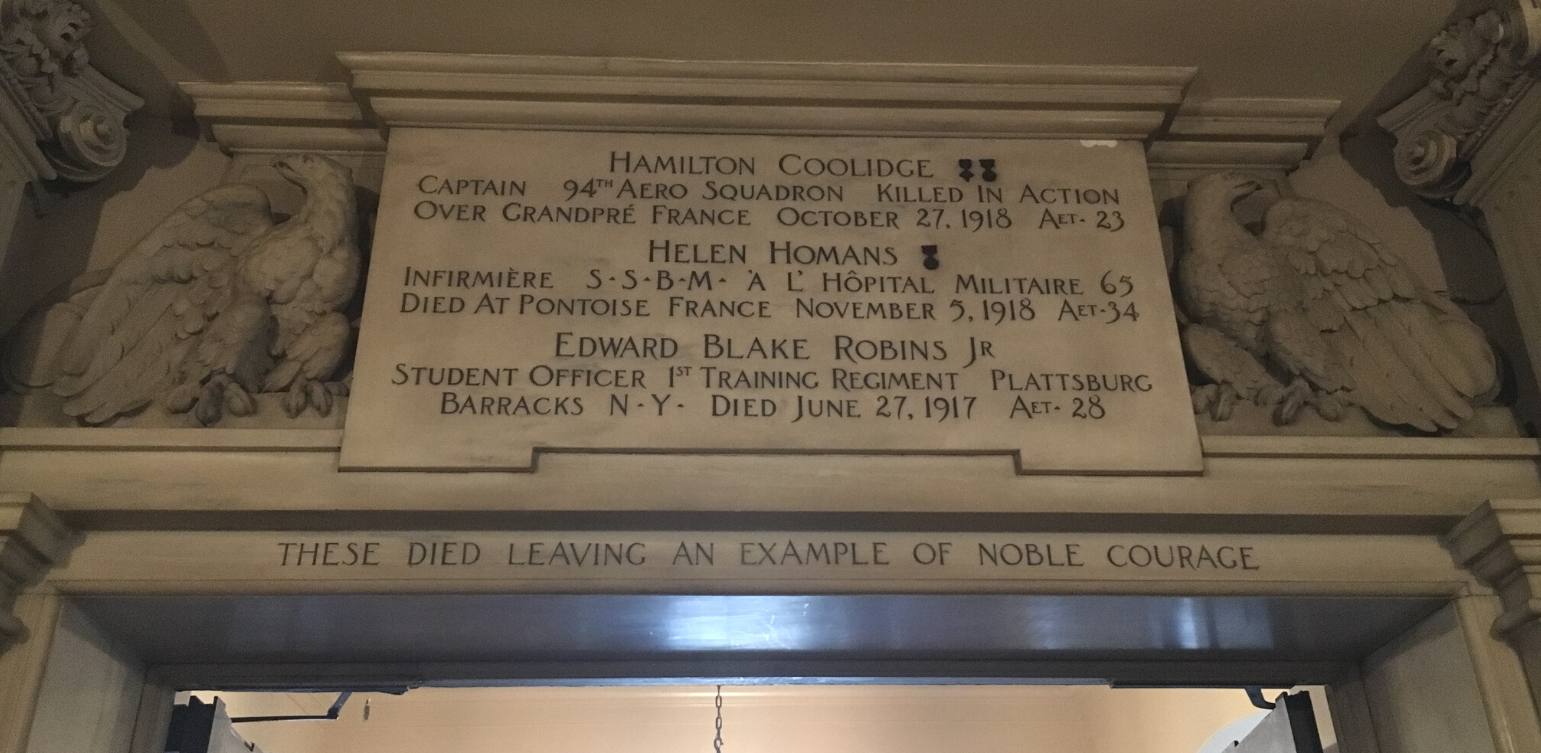
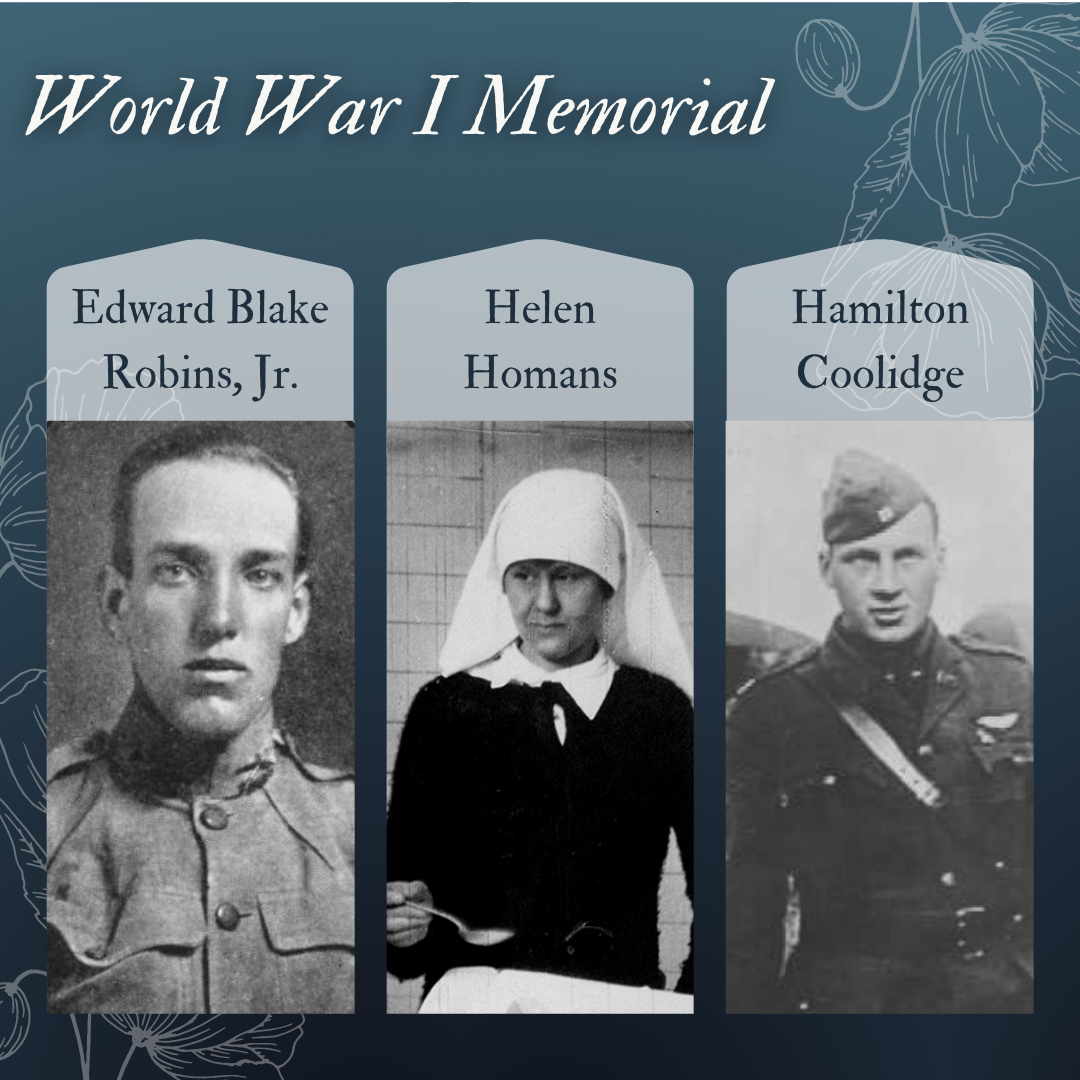
Charpentier, Faye. “Decking the Halls: The History of ‘Greening’ for the Holidays at King’s Chapel.” King’s Chapel History Blog, December 4, 2020. https://www.kings-chapel.org/historyblog/decking-the-halls-the-history-of-greening-for-the-holidays-at-kings-chapel. “Christ Child’s Birth: Boston Churches Generally Had Special Observances.” The Boston Globe. December 27, 1897. https://www.newspapers.com/image-view/430844904/?match=1&terms=christmas%20AND%20decorations. Churco, Jennie M.. “Christmas and the Roman Saturnalia.” The Classical Outlook 16, no. 3 (1938): 25–26. http://www.jstor.org/stable/44006272. “Greens for Christmas.” The Boston Globe. December 23, 1894. https://www.newspapers.com/image-view/430855164/?match=1&terms=christmas %20AND%20decorations. Gregory, Jeremy. “Refashioning Puritan New England: The Church of England in British North America, c. 1680-c. 1770.” Transactions of the Royal Historical Society 20 (2010): 85–112. JSTOR. Legacy of a dying father bequeathed to his beloved children: or sundry directions in order unto a well regulated conversation, 1693-1694, MS0909. The Congregational Library & Archives, Boston, MA. “Local Intelligence: Christmas Services.” The Boston Evening Transcript. December 23, 1876. https://www.newspapers.com/image-view/735186400/?match=1&clipping_ id=186322050 “The Nativity: How the Great Festival Will Be Observed Today.” The Boston Globe. December 25, 1874. https://www.newspapers.com/image-view/428237335/?match=1&terms=christmas%20AND%20decorations. Nissenbaum, Stephen W. “Christmas in Early New England, 1620-1820: Puritanism, Popular Culture, and the Printed Word.” Proceedings of the American Antiquarian Society 106, no. 1 (1996). Sewall, Samuel. Diary of Samuel Sewall, 1674-1729. Second. Volume 1. Massachusetts Historical Society, 1878. https://archive.org/details/diaryofsamuelsew01sewaiala/ page/230/mode/2upq=%22king%27s+chapel%22. Simpson, Jacqueline, and Roud, Steve. “Christmas decorations.” In A Dictionary of English Folklore. Oxford University Press, 2003. https://www.oxfordreference.com/display/10.1093/acref/9780198607663.001.0001/ acref-9780198607663-e-185?rskey=9yrZd0&result=9. Wardens and Vestry minutes for 31 October 1753 and 5 December 1753. Ms. N-1867, Wardens and Vestry 1687-1917, Box 1, Folder 13. King’s Chapel Archives, Massachusetts Historical Society. “When I Was a Boy: Christmas Recollections of Col Higginson, ex Gov Claflin, Rev Dr S. F. Smith., Edward Everett Hale and Charles Theodroe Russell.” The Boston Globe. December 24, 1893. https://www.newspapers.com/image-view/430705425/?match=1&terms=christmas%20AND%20decorations%20AND%20%22king%27s %20chapel%22 By Mallory Hillary, Operations Manager and History Program EducatorAt King’s Chapel, we are fortunate enough to host visitors from all over the world. This August, one of our international visitors helped us reconnect with some of our own history. In the sanctuary of King’s Chapel, just above the main doors, there is a marble banner flanked by two eagles. This is the church’s official memorial for World War I. There are three names engraved on the banner: Hamilton Coolidge, Helen Homans, and Edward Blake Robins Jr. Hamilton Coolidge in his service uniform. (Photo courtesy of Doughboy Foundation.) Coolidge, often referred to as “Ham” by his friends, calls to mind something of a proto-Captain America type. Born to a well-to-do family in Brookline, Coolidge would go on to become a senior prefect, captain of the football team, and a pitcher on the baseball team at his high school. When Coolidge graduated in 1915, he went on to Harvard and was elected Vice-President of the freshman class. Eventually though, Coolidge dropped out and went into the military alongside his Harvard friend Quentin Roosevelt, the son of President Theodore Roosevelt. A book, titled Letters of an American Airman, gives us some insight into what life was like for these early American pilots. Flying was still so new to war that Coolidge and his friends were helping to set up the first American military flying school in France. Per his letters, the process required a good amount of work, but he often painted it all as jolly good fun. The only complaint Coolidge had about their conditions was the constant mud. In fact, it infuriated him so much that he wrote a poem to his family about how annoying he found it. “The rain it raineth every day, In his letters, Coolidge revealed himself to be enthusiastic, a hard-worker, a comedian, and eminently self-aware. He described exploring patisseries in Paris, outlined what he believed would be the future of aviation, and shared the day-to-day life of an American serviceman in France. Ham quickly distinguished himself in the service, helping to teach new pilots how to fly and racking up feats himself. Eventually in October of 1918, he earned the title of ‘ace’ when he achieved four kills of enemy aircraft in a single two-day period. At the time, that brought his total count to five (the official benchmark for ‘ace’ status), but Coolidge would achieve eight kills before his own passing. Many of the young men who were flying aces in World War I did not survive. Early engineering combined with the newness of aerial dogfights and strength of German anti-aircraft measures made for a deadly combination. Quentin Roosevelt was killed in action behind enemy lines a short while before Coolidge. Of his friend’s passing, Coolidge wrote: “Death is certainly not a black, unmentionable thing, and I feel…that dead people should be talked of just as if they were alive. At mess and sitting around in our quarters the boys that have been killed are spoken of all the time when any little thing reminds someone of them. To me Quentin is just away somewhere. I know we shall see each other again and have a grand old “hoosh,” talking over everything together. I miss him the way I miss Mother and the family, for his personality or spirit are just as real and vivid as they ever were.” Coolidge reunited with his friend on October 27, 1918. Ham was acting as an escort when the Germans began attacking the planes he was helping to shepherd. By all accounts, he immediately dove in, hoping to draw fire and eliminate the German threat. Unfortunately, the German military had extremely well-positioned anti-aircraft forces. His plane was struck by multiple shells, one of which hit immediately beneath his engine. This likely killed him instantly. His plane crashed near the Aire River and the village Chevières. Shortly afterward, his commanding officer tracked down the wreckage and helped bury his remains: “And here in the bend of the Aire, almost in full sight of the enemy, we came upon the body of Captain Coolidge. A lieutenant in infantry who had seen the whole spectacle and had marked down the spot where Ham's body had fallen, accompanied us and it was through his very kind offices that we reached the exact spot without much searching. The Chaplain of his regiment likewise accompanied us. And there, not sixty yards behind our front lines, we watched the men dig a grave. The Chaplain administered the last sad rites. Amid the continuous whines of passing shells we laid the poor mangled body of Captain Hamilton Coolidge in its last resting place. Over the grave was placed a Cross suitably engraved with his name, rank and the date of his tragic death. A wreath of flowers was laid at the foot of the cross.” The American military moved Ham’s body to a central burying space for American servicemen in a different spot in France. However, the Coolidge family wanted him to remain where he fell. They purchased a plot of land near his original burial space and created a memorial, reinterring him at the memorial. Ham’s parents made an agreement with Chevières; in exchange for the village looking after their son’s grave, the Coolidge family helped fund the town’s rebuilding efforts. There are stories of them even acting as Secret Santa and purchasing Christmas gifts for the children. Just last year, Coolidge family descendants had to move Ham once again. The original memorial site was disappearing quickly due to a change in the river flow and erosion. The new memorial is in a safer spot, away from the water. The U.S. military helped move his remains to the new space in a somber ceremony, where the town, including the mayor, recommitted to caring for Ham’s memorial. This is where I get to reintroduce the visitors mentioned in the first paragraph, because they were none other than Jean-Charles Genty, the mayor of Chevières, and his family! They were on vacation in Boston and stopped in to visit as they walked the Freedom Trail. Mayor Genty generously shared updated photos of Hamilton Coolidge’s memorial once he returned to France. Hamilton Coolidge and his legacy stand as a reminder this National Veterans and Military Families Month to pause and remember the men and women who have given their lives in service. For information on another King’s Chapel congregant who participated in World War I, see our article about Helen Homans, a nurse who also served in France.
By Noah Good, Marketing Manager and History Program Educator Just above the doorway into the sanctuary lies a memorial. Two marble eagles rest on either side of a carved plaque with three names: Hamilton Coolidge, Helen Homans, and Edward Blake Robins Jr. Below their names, an inscription reads “These died leaving an example of noble courage.” All three died in World War I. Coolidge was a Captain in the 94th Aero Squadron and was shot down over Grandpré, France in 1918. He was 23 years old. Robins, a student officer in the first training regiment, died in the Plattsburgh Barracks in New York at the age of 28. But who was Helen Homans, the only woman named on this plaque? Helen Homans was born on January 26, 1884 to Dr. John Homans and Helen Amory Perkins. She was the fifth of six children. Her family worshiped at King’s Chapel in Pew 26. Her family had a long legacy for practicing medicine in the Boston area, dating back to her great-grandfather Dr. John Homans who was a surgeon during the Revolutionary War. Her father Dr. John Homans (1836-1903) was a surgeon during the Civil War and pushed Massachusetts General Hospital to allow abdominal surgeries. Helen studied at Miss Winsor’s school and graduated from Radcliffe College. She took an interest in medicine, volunteering at Mass General Hospital. When World War I broke out, Helen’s brothers Robert, John, and William each served. In February 1915, Helen applied for a passport in order to go to France as a nurse. This was two years before the United States declared war against Germany. Homans traveled to Europe to serve at a time when few Radcliffe alumnae did the same. Helen left in the spring, to work as a nurse in French hospitals. She returned to Boston for short periods, again volunteering at Mass General. In the last passport application she filled out, Helen made it clear that she wanted to stay in France until the war’s end. Where the form said “I intend to return to the United States within” and left a space for an answer, Helen crossed out “within” and wrote “at end of war.” She said she would return from France “as soon as work is finished.” During her time in France, she became close friends with fellow Bostonian Edith Parkman and Canadian Katharine McLennan. Letters, photographs, and drawings from Katharine give us a window into what these women’s lives were like during their service. Their work was exhausting and grisly, but Katharine’s letters only briefly mention the horrors of war. Perhaps not wanting to worry her family, she instead wrote about the lighter side of her experience. When they were off-duty, Helen, Katharine, and Edith would take day trips to the French countryside. The women also played checkers with each other and the patients. Katharine sketched the soldiers she treated, both in watercolor portraits and in striking scenes. These sketches allow modern viewers to see a peek of what would have been the daily lives of Helen, Katharine, and Edith. In Christmas, the staff decorated the hospital ward and patients and staff alike performed in a festive tableau. During a brutal war, surrounded by patients with gruesome injuries, Helen’s friendships with her fellow nurses must have given her comfort and solace. In the fall of 1918, Helen was stationed at l’Hôpital de l’Armée No. 65 in Pontoise, France. The hospital was under bombardment, making her already difficult work all the more grueling. That fall, a deadly version of influenza erupted, resulting in an epidemic that would kill 50 million people worldwide. Helen became sick with influenza. Edith Parkman wrote to Helen’s mother and her own, describing Helen’s physical pain and delirium. At her bedside, she was awarded the Croix de Guerre with Palm, a French military decoration honoring bravery. French General Philippe Pétain signed the citation, commending “her absolute devotion to duty.” She passed away on November 5, only six days before the war ended. She was thirty-four years old. Katharine McLennan took a photo of Helen’s coffin adorned with flowers. Looking at this photo, we can see the care that the mourners took in decorating her coffin. In a letter, Katharine wrote, “Edith and I feel very queer and lonely without Helen, she had such bounteous energy and always knew first what we ought to do and now it seems almost pointless to go on without her.” On December 14, Helen’s funeral was held at King’s Chapel. The space was decorated with lilies and French and American flags were placed at the chancel. Her friends raised $21,000 for a nursing scholarship fund in her memory. Helen’s friend Edith Parkman married William Homans two years later. If Helen had lived, they would have been sisters-in-law. On November 11, 1925 at King’s Chapel, a memorial plaque was dedicated to the memories of Helen Homans, Hamilton Coolidge, and Edward Blake Robins. In 2001, Harvard’s Memorial Church was updated to include a plaque with Helen’s name and those of two other Radcliffe women who died in World War I. Volunteer nurses like Helen provided an incredible service during the war. In honor of Helen and two fellow Radcliffe alumnae who died in the war, the 1918 issue of the Radcliffe Quarterly wrote: “They gave their lives for their country and its allies just as surely as if they had met death in the trenches. To those of us who knew them in college there comes a curious feeling that we knew beforehand that each of them had in herself the qualities that command a courageous life and an heroic death.” BibliographyBarshes, Neal R., and Michael Belkin. “The Homans Family in American Surgery.” Annals of Surgery 261, no. 2 (2015): 418. https://doi.org/10.1097/SLA.0000000000000706.
The Boston Globe. “Throng at Funeral of Miss Helen Homans.” December 14, 1918. Newspapers.com. Comeau, George T. “True Tales: Helen Homans, A Hero’s Death.” Canton Citizen, 2013. https://www.thecantoncitizen.com/2013/06/14/true-tales-homans-pt2/. Encyclopedia Britannica. “Croix de Guerre.” Accessed November 5, 2025. https://www.britannica.com/topic/Croix-de-Guerre. Foote, Henry Wilder, Henry Herbert Edes, John Carroll Perkins, and Winslow Warren. Annals of King’s Chapel from the Puritan Age of New England to the Present Day. With Harold B. Lee Library. Boston : Little, Brown, 1882. http://archive.org/details/annalsofkingscha00byufoot. 24. Johnston, A.J.B. “Into the Great War: Katharine McLennan Goes Overseas, 1915-1919.” In The Island: New Perspectives on Cape Breton’s History, 1713-1990. Fredericton, N.B.: Acadiensis, 1990. http://archive.org/details/islandnewperspec0000unse. Keown, Bridget E. “‘I Think I Was More Pleased to See Her than Any One “Cos She’s so Fine”: Nurses’ Friendships, Trauma, and Resiliency during the First World War.” Family & Community History 21, no. 3 (2018): 151. https://doi.org/10.1080/14631180.2018.1555955. "Massachusetts, State Vital Records, 1638-1927," database with images, FamilySearch (https://familysearch.org/ark:/61903/3:1:3Q9M-C9BN-23NT-V?cc=1928860 : 24 November 2022), > image 1 of 1; State Archives, Boston. McGuire, Michael. “A War Generation?: The Radcliffe College Community in the Great War Era, 1914–1926.” The Journal of the Gilded Age and Progressive Era 19 (2020). https://doi.org/doi:10.1017/S1537781420000146. McLennan, Katharine to Grace McLennan, 4 December 1918, MG 12.189.6 U, Beaton Institute Archives. https://www.kmclennan.com/themes/exhibit-item/?theme=wwi&subtheme=correspondence&document=38. “Medical Notes.” The Boston Medical and Surgical Journal 180, no. 13 (1919). The National Archives. “The Influenza Epidemic of 1918.” Accessed November 5, 2025. https://www.archives.gov/exhibits/influenza-epidemic/. Photograph of Edith, Helen, and Katharine. 1917. Cape Breton Regional Library, McLennan Collection. CBRL-P68. https://www.kmclennan.com/themes/exhibit-item/?theme=wwi&subtheme=photograph%20gallery&document=29. Photograph of Helen Homan’s coffin. 1918. Cape Breton Regional Library, McLennan Collection. CBRL-P255. https://www.kmclennan.com/themes/exhibit-item/?theme=wwi&subtheme=photograph%20gallery&document=162. Photograph of Katharine playing checkers with patient Laborde. 1917. Cape Breton Regional Library, McLennan Collection. CBRL-P58. https://www.kmclennan.com/themes/exhibit-item/?theme=wwi&subtheme=photograph%20gallery&document=27. “Plaque Honors Radcliffe Women Who Died in WWI.” Harvard Gazette, November 8, 2001. https://news.harvard.edu/gazette/story/2001/11/plaque-honors-radcliffe-women-who-died-in-wwi/. Radcliffe Institute for Advanced Study, Radcliffe Union, and Radcliffe College. “Radcliffe War Records.” The Radcliffe Quarterly (Cambridge, Mass.) III (December 1918). https://catalog.hathitrust.org/Record/100557898. 9. Washburn, Frederic A. “Helen Homans.” The Boston Medical and Surgical Journal, vol. 182, no. 17, 1920. https://doi.org/10.1056/NEJM192004221821701. "United States, Passport Applications, 1795-1925", FamilySearch (https://www.familysearch.org/ark:/61903/1:1:QV5B-62NB : Fri Apr 25 02:51:15 UTC 2025), Entry for Helen Homans, 1918. by Jon Hill, History Site Educator One of the things that fascinates me the most about history are the stories of everyday people. While the stories of major revolutionaries and iconic historical leaders are intriguing, I find learning about the lives of the average shoemakers and farmers to be just as compelling. As an educator for the history program at King’s Chapel, I became interested in the story of the people buried in the crypt. The King’s Chapel crypt offers unique insight into the lives of many citizens of Boston who died in the city between 1754 and the late 1800s. The crypt under the chapel was first constructed along with the current building in 1754. It appears that one of the first people to be interred in the tombs under the chapel was a worker named William Bell. According to Memorials of the Dead in Boston by Thomas Bridgman, Bell was working on the stone work of the building when a piece of stone struck him in the eye. He died three days later. When construction finished on the tombs and workers pronounced the crypt fit for burial, workers attempted to bury him in one of the tombs. To quote Bridgman, “while they were removing his remains to the tomb, the roof fell in, the men narrowly escaping with their lives.” The workers removed Bell’s remains until the tomb could be repaired. To find stories like this, I have started a project investigating the records to try to identify as many names of people buried under the chapel. One of the primary sources that I have used for information is the Register of the Deaths and Burials in the Middle District, which started recording information in 1810. Since the crypt under King’s Chapel was located in the Middle District, this collection provides in-depth information about the burials under the chapel. The King’s Chapel Burying Ground next to the chapel makes things a bit more complicated. Recordkeepers documented interments in the burying ground next to the chapel in one column, and recorded burials under the chapel in the columns labeled ‘Chapel Church Cemetery’. Through these records, we can glean a great deal about the lives of the people buried and the exact tomb of their burial. For example, we know that in 1816, the church buried a twenty-three-year-old named Lieutenant George B. Sheldon in the Strangers’ Vault. The burial record for Sheldon states he was a soldier at Fort Independence located in Boston Harbor and died from consumption, the 19th-century term for tuberculosis. Records like these offer an insightful glimpse into the lives and deaths of the people of the city of Boston. Thus far, between January of 1810 and June of 1839, I have found burial records for over 420 people buried in the tombs beneath the chapel. The number will continue to grow as I continue my work. This research is not without challenges. While there are records of funerals conducted in the chapel going back into the early 1700s, those records do not specifically designate burial sites. Thus, it can be almost impossible to identify where individuals are interred if their burial occurred prior to the 1810 citywide burial records. In addition to this, I have also been investigating sources at the Massachusetts Historical Society, where a majority of the records of King’s Chapel are held. Within the ledgers notating expenses from the chapel, there are occasionally entries for burials. For example, one entry reads: “July 24th 1774: 3 pounds 0 shillings by cash of Capt Denny for the internment of his child in the Vault.” While this does not list specifically which tomb Captain Denny buried his child in, the entry provides insight that the burial happened at King’s Chapel in July of 1774.
By the mid-19th century, crypt burials were falling out of favor as more people sought to be buried in rural garden-style cemeteries such as Cambridge’s Mount Auburn Cemetery and Jamaica Plain’s Forest Hills Cemetery. Many families opted to have their loved ones' remains removed from the crypt and reburied elsewhere. The city-wide Register of the Deaths and Burials often noted these reburials. For example, the record of Charles Bulfinch, a famous Bostonian architect, shows his initial 1844 burial alongside a note about his reinternment in Mount Auburn Cemetery on May 23, 1854.
In addition to changing burial traditions, there were growing concerns about health and safety surrounding crypts. Ultimately, the city of Boston ordered the crypts in the city to be sealed by bricks per Chapter 190 of the Legislative Act of 1890. This act marked the end of new burials in the King’s Chapel Crypt. Going through these records and doing this research helps recover some of the countless stories of the everyday people who lived their lives in Boston and were ultimately buried beneath the chapel’s walls. This work allows the history program to tell their stories to guests from across the world, as well as build a starting point for future researchers. by Avery Dubyk, History Site Educator King’s Chapel has a hidden gem tucked away in the back of the sanctuary - a painting of the Last Supper, with a surprising connection to the American Revolution and John Hancock! Depictions of the Last Supper show the last meal that Jesus had with his apostles before Roman guards captured and crucified him. A donor gifted the painting to the church some time before the American Revolution, with the intention that King’s Chapel use it as an altarpiece. Instead, the church leadership chose to place the painting in the home of the then minister, Reverend Henry Caner.
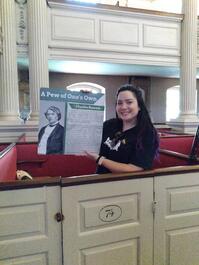
Reverend Caner, as a minister of the Church of England, supported the English monarchy. During an event known as Evacuation Day, many people loyal to the crown fled the city of Boston, including Reverend Caner. Due to the speed of the evacuation, he left behind most of his possessions, including the painting. In the chaos, British soldiers ransacked Caner’s home. Church members Edward Davis and Colonel Agneau, accompanied by a guard, secured the building to prevent further theft or damage. While in the home, Colonel Agneau noticed the painting and decided to remove it so it would not incur any damage. Initially, Edward Davis brought the artwork to his house. Eventually, inspiration struck when Founding Father John Hancock visited Edward Davis’s home. Davis requested that Hancock take the painting to his larger (and likely more secure) mansion. The painting remained at Hancock’s mansion through the rest of the war. At some point in the back and forth, the painting was folded in half, leaving a large crease down the middle, which is still visible today. Eventually, although it is unclear exactly how, the painting found its way back to King’s Chapel, and has remained in the building ever since. Rumors swirled about who may have actually created the painting. For years, the congregation believed the painting to be the work of Benjamin West. This belief was fueled by the signature on the painting, “B. West”. West was an important early English-American artist, so it would be a big deal to own one of his paintings! The artwork looks darker than the artist intended due to smoke damage from candle use within the church. The church wanted to get the painting cleaned, so they brought in an expert to evaluate the image. He discovered that the painting was not painted by Benjamin West at all! Instead, the expert believed that the painting was made by a minor Flemish artist, likely at some point in the 17th century. It seems as though someone added the “B. West” signature on much later. We do not know who actually created the painting, and likely never will. However, there are a few things we can determine about their life and background. It seems as though the painter is familiar with the work of Caravaggio. Caravaggio was a popular Italian artist from the late 16th and early 17th century. He is known for his use of significant contrast between light and dark. It is easy to spot that influence in King’s Chapel’s depiction of the Last Supper. The central figures, including Christ and the legs of the man in the front center of the work, are bright and light, while the edges are darker. Caravaggio also has a distinct style of painting feet, which is imitated in the painting as well. Learn more about the Last Supper painting and King’s Chapel’s history by following us online or by visiting us in person! by Lin Nulman, Historic Site Educator We've had a wonderful summer of visitors so far at King's Chapel. Cheryl created her own family reunion in the box pew of Senator Charles Sumner, who is an ancestor. She has his name tattooed on the sole of her foot! In 2021, we hosted a fascinating virtual talk about Sumner by Park Ranger Meaghan Michel, in cooperation with the National Park Service. "Let Me Be All Yours": The Romantic Friendship of Charles Sumner & Samuel Gridley Howe" is available online. Boston's Harborfest celebration ran this year from June 30 through July 4, and we welcomed almost 5000 visitors to the chapel, many of whom were walking the Freedom Trail and enjoying the historic sites. It was fun to have the Harborfest volunteers as visitors, as they contributed extra "stepping back in time" vibe to beautiful 18th-century King's Chapel. This past week, I was lucky enough to give a tour to a metal artist, who admired the chapel's stonework and old wood, and then was, of course, especially "into" the 1816 Revere and Son Foundry bell. And got into the bell literally, too! The History Program staff has every reason to look forward to the second half of summer.
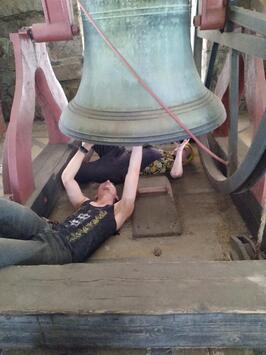
by Lin Nulman, Historic Site Educator In April, for National Poetry Month, we had literary historian Rob Velella as our virtual guest speaker. This enjoyable talk on the “friendship poems” of Oliver Wendell Holmes Sr. focused on the literary and Harvard friends who inspired him. Dr. Holmes also wrote about King’s Chapel, where he was a member, on several occasions. Another Holmes poem I find both charming and poignant has a secret chapel connection. “The Last Leaf” was, as Rob explained to us, written about Thomas Melvill, whose memorial stone is attached to the back wall of the King’s Chapel. Whether it was placed there in his honor, or was displaced out of the Burying Ground at some point, I’m not sure. (Research to do!) The poem’s speaker sees aged Mr. Melvill walking in Boston, looking weary and lost and out of step with the 19th century. His clothes are from younger days in the 18th century: “the old three-cornered hat,/And the breeches, and all that...”. He seems to be thinking sadly of people long gone. The poem’s speaker wants to chuckle at his eccentric look, but also feels deeply for Melvill’s losses, knowing that he may find himself someday in Melvill’s old-fashioned shoes.
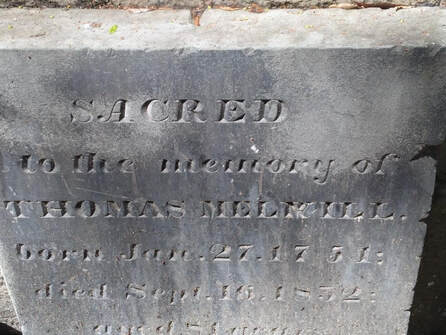
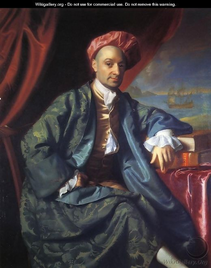
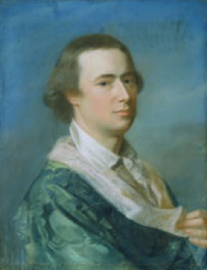
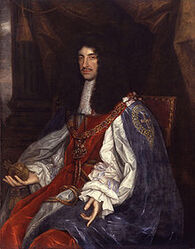
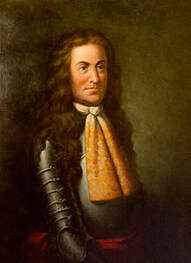
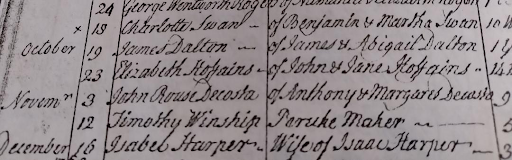
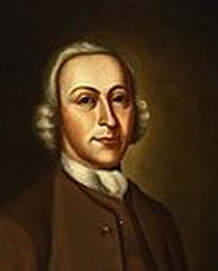
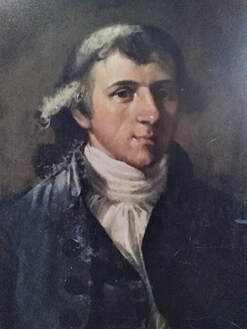
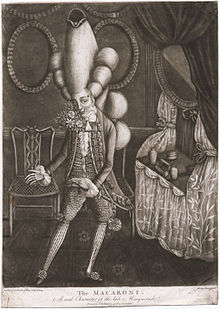
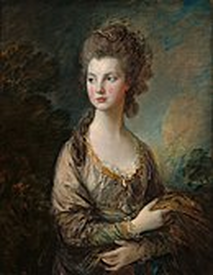
“The Last Leaf” was not a Holmes poem I knew, and as a King’s Chapel History Program educator, I’m happy Rob introduced us. I have Melvill’s image from the poem in my mind now whenever I see this stone, and he's become, vividly, a person who once lived, once took a walk, was once seen by an empathetic poet. The poem preserves a sense of his life, and the stone preserves his name and the dates of that lifetime. Together they get me thinking, during Preservation Month in May, about what preservation can be. It can be the profound preservation of this entire mid-18th-century church and crypt, so much of which is original. It can be stories about past people and events, whether in writing or in conversations we have with chapel visitors. It can also be quiet objects I pass by sometimes, that suddenly blossom into new meaning, as the Melvill stone did through Oliver Wendell Holmes’s poem. I have gladly collected “The Last Leaf” into my mental anthology of King’s Chapel writing. Other pieces in the collections include the poems and prose of member Sarah Wentworth Morton, and the novels The Scarlet Letter and Little Women. Come visit and ask us why! “The Last Leaf” felt especially good to discover during April, Literature and Poetry Month, because Thomas Melvill’s grandson, my beloved Herman Melville, had a whale of a time as a writer himself. by Lin Nulman, Historic Site Educator When visitors read the History Program’s informative signs in King’s Chapel, they see several portraits of its “bigwigs.” And some have very big wigs indeed, which is the origin of that expression! The history of gentlemen’s wigs from the mid-1600s to the early 1800s appears in the images along the chapel’s center aisle. Wig history is about wealth, elaborate high-fashion, a taste for artificiality in personal style, disease, taxes, and, in Boston, even Revolutionary feeling. Long, curly locks were the ideal for European men in the 1600s. Sources agree this ideal was a problem for King Louis the XIV of France, who began balding as a teenager. When he and King Charles II of England, his prematurely graying cousin, began to wear lush wigs in the mid-1600s, courtiers and the rich were quick to imitate them. Men’s wigs became an important fashion trend. King Charles II by John Michael Wright or studio, 1660s: image from Wikipedia The wigs of that period, and into the early 1700s, were larger than those of the later 1700s. Royal Governor Sir Edmund Andros, who seized a piece of Boston city property in the 1680s for the building of the first King’s Chapel (where the current chapel stands now), wore a typical wig with a huge flow of curls. Royal Governor Sir Edmund Andros by Frederick Stone Batcheller: Image from Wikipedia Wigs (some styles were called perukes or periwigs) were made of human, horse, or goat hair. White hair was desirable but rare, so powder allowed men to get the white “look” for darker wigs, or for their own hair. The powder, usually made from fine flour or starch, was also sometimes tinted blue or lavender. Styling products included beeswax or lard, and orange or herb scents were added to cover the odors of dirt, sweat, and rancid animal products. Wigs had practical benefits. Balding was not only unfashionable, it was also a symptom of syphilis, as were sores and other skin conditions. From the 1500s, the disease spread through Europe, and a wig could help hide these unfortunate symptoms. A wig also helped keep the head clean at a time when lice infestation was common. Men often shaved their heads, and let their wigmakers or servants boil infested wigs for the cleanest possible hair. A King’s Chapel funeral record of 1767 lists Timothy Winship, a Boston peruke-maker, whose profession would likely have combined a maker’s skill and artistry with follow-up cleaning and maintenance. Nov. 12, 1767 saw the loss of Timothy Winship and his wig skills. Wigs also provided a way to display wealth and social status. The amount and color of wig hair, the elegance of hair-dressing, and the elaborate clothes that went with the wig, all reflected the money and leisure necessary for a fine appearance. During the 18th century, wigs became smaller and more restrained. Peter Harrison, architect of the current King’s Chapel, shows this change in fashion. Whether this is a wig or his own powdered hair, the style would be the same, with precise side curls and likely a ponytail, or queue, tied at the nape of the neck. Architect Peter Harrison, done from a 1756 Nathaniel Smibert original: image from Wikipedia King’s Chapel’s first Unitarian minister was a young man when he took the position in the 1780s. In his portrait he wears the same style, called a buckled club, or club, wig, unless that’s his own powdered hair. The side curls are larger than Harrison’s, and the queue behind is more visible. It may be in shadow, or in a wig bag, a cloth accessory into which gentlemen tucked their queues to keep hair powder off their clothes. Reverend James Freeman, by Christian Gullager circa 1794, in the King’s Chapel Parish House Similar wigs appear in film adaptations of Jane Austen’s Sense and Sensibility on the head of Sir John Middleton, a man from the generation before that of the young protagonists. Austen’s “parent” characters were really 18th-century people, after all. I’m a fan of actors Robert Hardy and Mark Williams, each wearing the periwig of their character’s younger days, the former in the Ang Lee film and the latter in the 2008 miniseries. The tight styling of some wigs and the looser, more natural style of others, can be seen together in a scene from The Madness of King George. Some 18th-century wigs were made to resemble a man’s own hair, and some hair was then styled to resemble these wigs. I imagine a Prime Minister having an audience with a monarch might have his wig on. Here King George III (Nigel Hawthorne) and Prime Minister Pitt (Julian Wadham) discuss that the colonies need to be called “America”. The king is not pleased to be reminded! In the 18th century, wigs were a widespread fashion. Even servants wore them as part of their livery, or fancy “working clothes.” Some servants were finely dressed when they served, or stood ready to serve, being the human equivalent of elegant furnishings. Male servants continued to wear wigs as part of their uniforms even after gentlemen abandoned the fashion. In this brief scene from Pride and Prejudice, we see how the bowing servant’s old-fashioned livery and wig stand out among the fashionable gentlemen who no longer wear any such thing. Some well-off Bostonians did not wear wigs in portraits, choosing a more casual look instead. John Singleton Copley’s portraits of Nicholas Boylston and Joseph Barrell show them in banyans (house robes) of rich fabric. Boylston reveals his shaved head under a cap, and Barrell, a King’s Chapel member and current crypt resident, wears his own unpowdered hair or a loosely styled, plain brown wig. These gents may have been moderating or carefully crafting how they showed their wealth. In the Revolutionary period, the desire for political freedom from England was matched by a desire for cultural freedom from the decadence of European fashion and goods. Living a wealthy lifestyle could be difficult for American men who wanted to be seen as serious, virtuous citizens and supporters of the new nation’s ideals. After all, as the Declaration of Independence declared, they had soberly “pledge[d] to each other our Lives, our Fortunes and our sacred Honor”. Meanwhile, many lived lives of economic and social privilege to rival the minor English nobility. This print shows the extremes of European excess from which they were trying to distance themselves. Artist Philip Dawe titled it "The Macaroni. A real Character at the late Masquerade". The Macaronis were young English people who pushed luxurious fashion to heights that shocked some of their contemporaries, never mind us today. (The British were actually mocking unsophisticated, unstylish colonists when they sang that Yankee Doodle thought he was a Macaroni just for having a feather in his hat. The colonists adopted the song, added some patriotic verses, and sang it to defy the British troops. So there!) by Philip Dawe, 1773: Image from Wikipedia So newly American men did feel pressure to reject excesses in fashion and personal display. Their clothes, although still of fine fabrics, often had darker colors and less embellishment than the highly embroidered court clothes of the European upper classes. The wig’s loss of popularity in America could be one more response to that pressure. Rejecting imported European fashion partly drove the boycotts on British goods in Boston before the Revolution. The Boston Tea Party was just one example of the intense negative feeling connected to British goods. Meanwhile in Britain, a tax on hair powder after 1795 lessened the popularity of wigs there. The tax was part of Prime Minister William Pitt the Younger’s effort to pay for Britain’s wars. Most gents who powdered had to pay one guinea for a certificate from the local Justice of the Peace. Fines were imposed on those miscreants who powdered their wigs or hair illegally. In the 1800s, as all Jane Austen film fans know, many men began just to wear their natural hair. Some men still wore wigs, but fewer and fewer. A number of early American Presidents did, at least in formal settings, but interestingly enough, George Washington’s famous snowy “do” was his own powdered hair, not a wig at all. We are not sure whether he wore a wig or just powdered his hair when he attended a concert at King’s Chapel! For anyone wondering, most English and English colonial women did not wear wigs. The clouds of hair we see in portraits and period dramas were mostly their own long hair with padding inserted for height and shape, plus back-combing, extensions, animal fat, hair powder, and accessories. Women often favored gray, or bluish-gray powder, a lot of volume, and fashionably placed curls, as did the lovely Honourable Mrs. Thomas Graham, painted by Thomas Gainsborough in the 1770s. This interesting video features a step-by-step recreation of such a hairstyle on a patient actor. Image from Wikipedia by Lin A. Nulman, Historic Site Educator This post dedicated to the memory of Amanda Hallay. References and Further Reading: Brekke, Lizzie. “‘To Make a Figure’: Clothing and the Politics of Male Identity in 18th-Century America”. In Gender, Taste, and Material Culture in Britain and North America, 1700-1830. J. Styles and A. Vickery (Eds.). pp. 225-246. Yale UP. 2006. Free, Liv. "Historical Styles- 18th Century Hair Tutorial" https://www.youtube.com/watch?v=yq4qKsgv8hU Galke, Laura. “Perukes, Pomade, and Powder: Hair Care in the 1700s” Lives and Legacies: Stories from Historic Kenmore and George Washington’s Ferry Farm https://livesandlegaciesblog.org/2015/01/28/perukes-pomade-powder/ Hallay, Amanda. “THE ULTIMATE FASHION HISTORY: The 18th Century” https://www.youtube.com/watch?v=2OsmWUr_iiM Reilly, Lucas. “Why Did People Wear Powdered Wigs?”. Mental Floss https://www.mentalfloss.com/article/31056/why-did-people-wear-powdered-wigs “The Rise and Fall of the Powdered Wig”. American Battlefield Trust. https://www.battlefields.org/learn/head-tilting-history/rise-and-fall-powdered-wig Did you know that this church was once called "Queen's Chapell?" The handwritten text on the image above comes from our church records during the reign of Britain's Queen Anne, between 1702 and her death in 1714. This church's name originally reflected the English monarch and head of the Anglican Church, and the name changed based on the monarch's gender.
Join the History Program in returning to the notion of the church as "Queen's Chapel" through our March programming this Women's History Month. Despite the official powers yielded by Queen Mary II and Queen Anne, women at King's Chapel did not have a voice in the church's leadership until the 1920s and could not be elected as church leaders until the 1940s. Yet, women have played a crucial role in this site's history and in their communities since the church's founding. Uncover the stories and legacies of twelve women connected to King's Chapel over the past 335 years through the online exhibit Queen's Chapel: Women's History at King's Chapel. Be sure to visit the final page of the exhibit, where you'll have the opportunity to share a story of an influential woman in your own life or in King's Chapel's more recent history. |
King's Chapel History ProgramDive deeper into King's Chapel's 337 year history on the History Program blog. Archives
January 2026
Categories
All
|